Phonics
November 19, 2025 2026-03-22 17:35Phonics
PHONICS
EDUCATE & ILLUMINATE
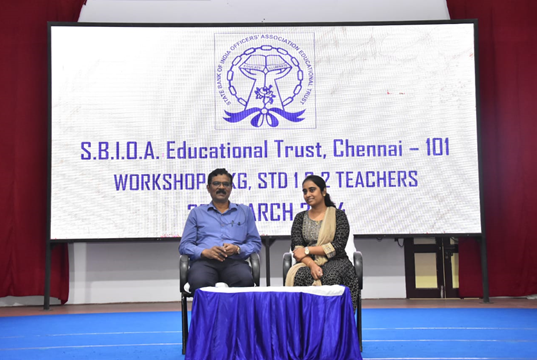
‘Jolly Phonics’ by Mrs. Aparnasree S. (Jolly Phonics Trainer)
Date: 23rd March 2024
Day: Saturday
Venue: Sitaram Hall
Time: 9 a.m. – 1 p.m.

Objective:
The workshop aimed to introduce educators to the Jolly Phonics teaching method, providing them with practical strategies and resources to effectively teach phonics to young learners.
Introduction to Jolly Phonics:
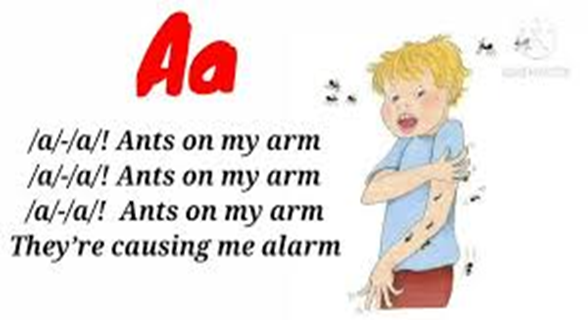
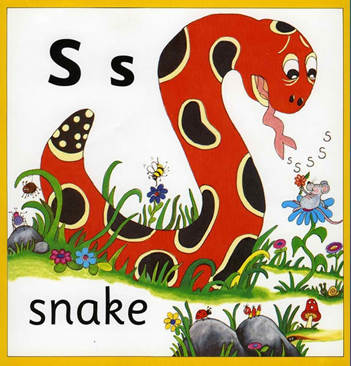
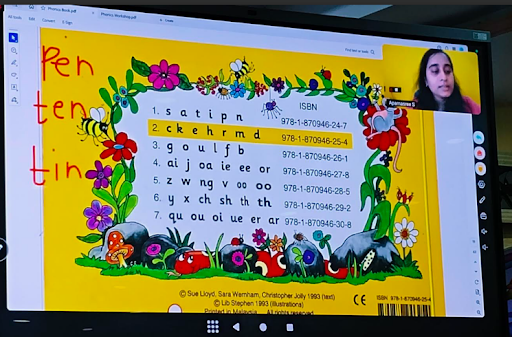
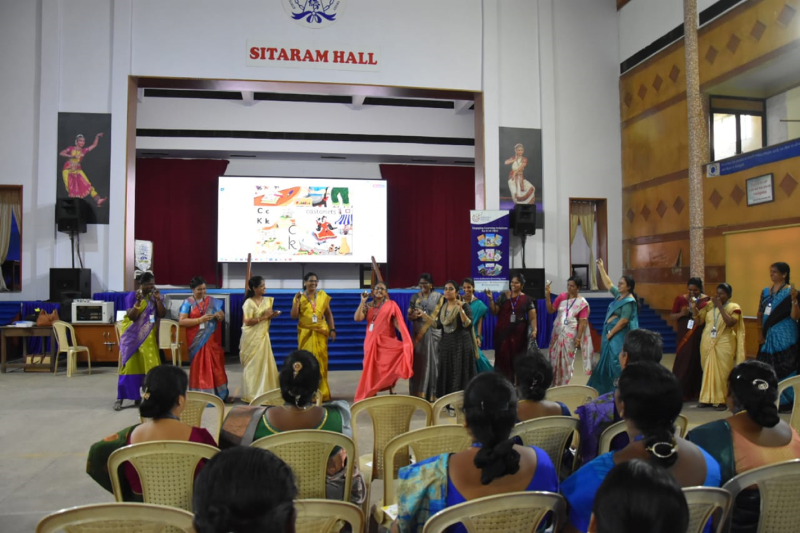
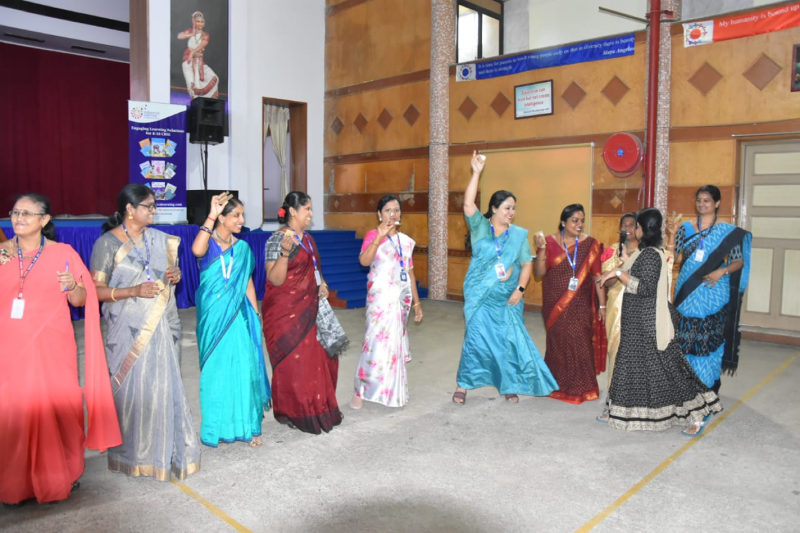
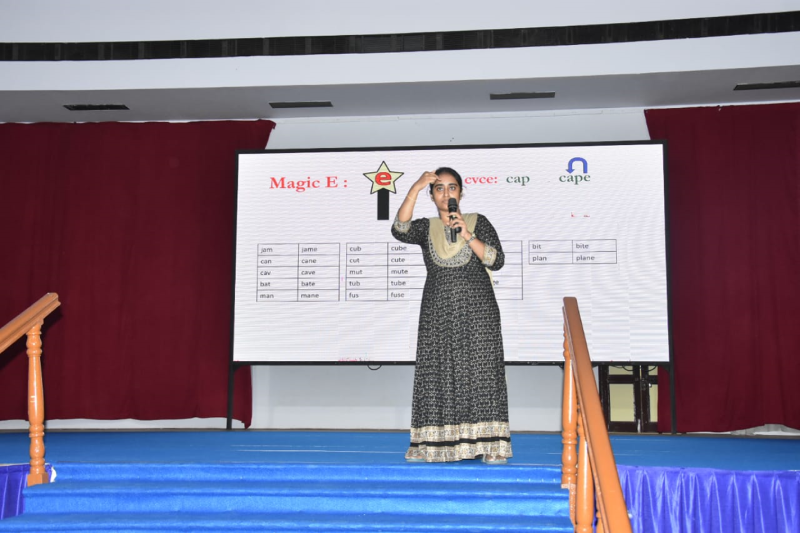
The session commenced with an overview of the Jolly Phonics programme, emphasizing its systematic approach to teaching phonics through synthetic phonics, blending and segmenting. Participants were introduced to the 42 letter sounds and their corresponding actions, which promote multisensory learning and enhance student engagement.
Understanding the Basic Skills in Jolly Phonics:
Educators were guided through a detailed explanation of the five key skills central to Jolly Phonics:
1. Learning the letter sounds
2. Learning letter formation
3. Blending sounds to read words
4. Identifying sounds in words
5. Recognizing tricky words
The facilitator stressed the importance of mastering these skills sequentially to establish a solid foundation for reading and writing.
1. Learning the letter sounds
2. Learning letter formation
3. Blending sounds to read words
4. Identifying sounds in words
5. Recognizing tricky words
The facilitator stressed the importance of mastering these skills sequentially to establish a solid foundation for reading and writing.
Practical Implementation Techniques:
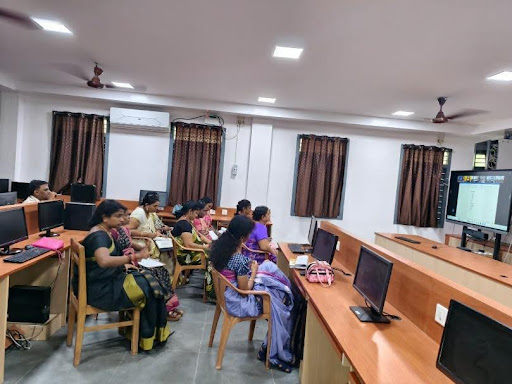
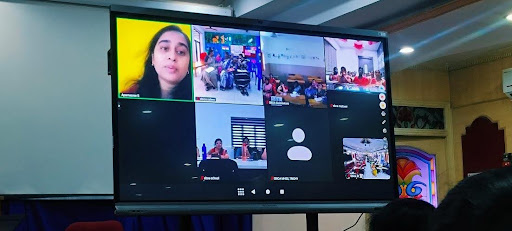
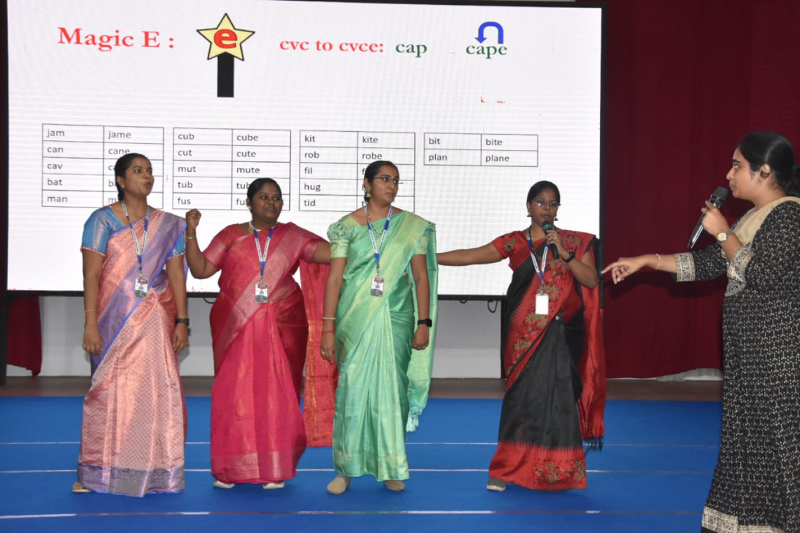
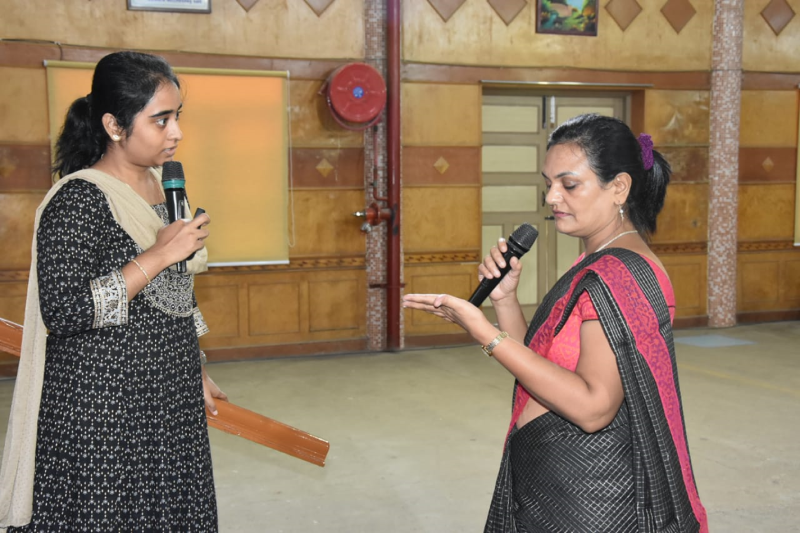
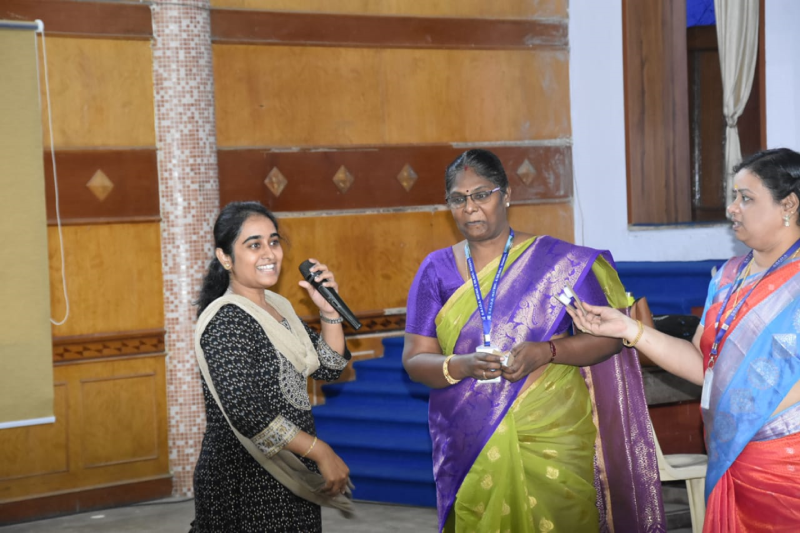
The workshop featured interactive demonstrations and hands-on activities to illustrate classroom applications of Jolly Phonics. Participants actively engaged in sound blending exercises, interactive games and guided reading sessions using authentic Jolly Phonics materials. Strategies for differentiated instruction and accommodating varied learning styles were also explored.
Feedback:
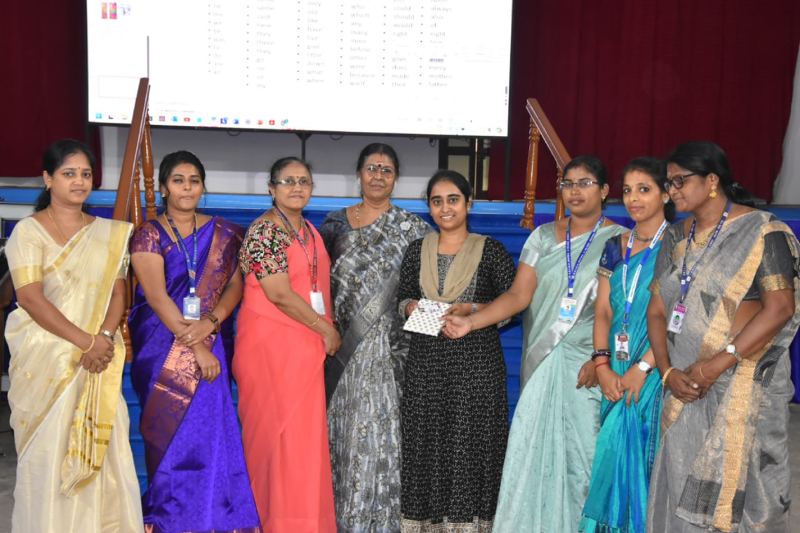
Participants responded enthusiastically, appreciating the practical and engaging nature of the workshop. Many expressed confidence in applying the techniques learned and highlighted the usefulness of the hands-on activities in making phonics instruction more effective and enjoyable.
Conclusion:
The workshop on Jolly Phonics provided educators with valuable insights, practical tools and confidence to enhance phonics instruction. By empowering teachers with effective methodologies and resources, the session aimed to strengthen literacy skills among young learners and build a strong foundation for language development.